A Season of Imagination
"Epiphany has always been a season of imagination for me–not the escapist kind, but the courageous, Spirit-filled imagination that dares to picture the world as God intends it."
Epiphany has always been a season of imagination for me–not the escapist kind, but the courageous, Spirit-filled imagination that dares to picture the world as God intends it:
- A world full of hope and hospitality.
- A world that doesn’t dehumanize and separate, but instead sees the goodness and potential in everyone.
Whether it’s holding the tenderness and tension in my life and work among migrant communities, where exhaustion and search for hope often feel constant, I have learned to lean into this practice. It has become a form of prayer.
I experience this season of imagination in the most ordinary places along the U.S.–Mexico border, particularly in my immigration advocacy work with World Relief:
- Crossing the port of entry to hug an old friend,
- Sharing a meal with an Image Bearer of God while they tell their migration journey,
- Looking up at the 30-foot steel bollard wall at Playas de Tijuana–
All of these experiences hold a similar invitation. I have to refuse allowing my fatigue to have the final word. Instead, my imagination of what God’s promised world could be must fill my mind and heart.
Epiphany has always been a season of imagination for me–not the escapist kind, but the courageous, Spirit-filled imagination that dares to picture the world as God intends it. Share on X
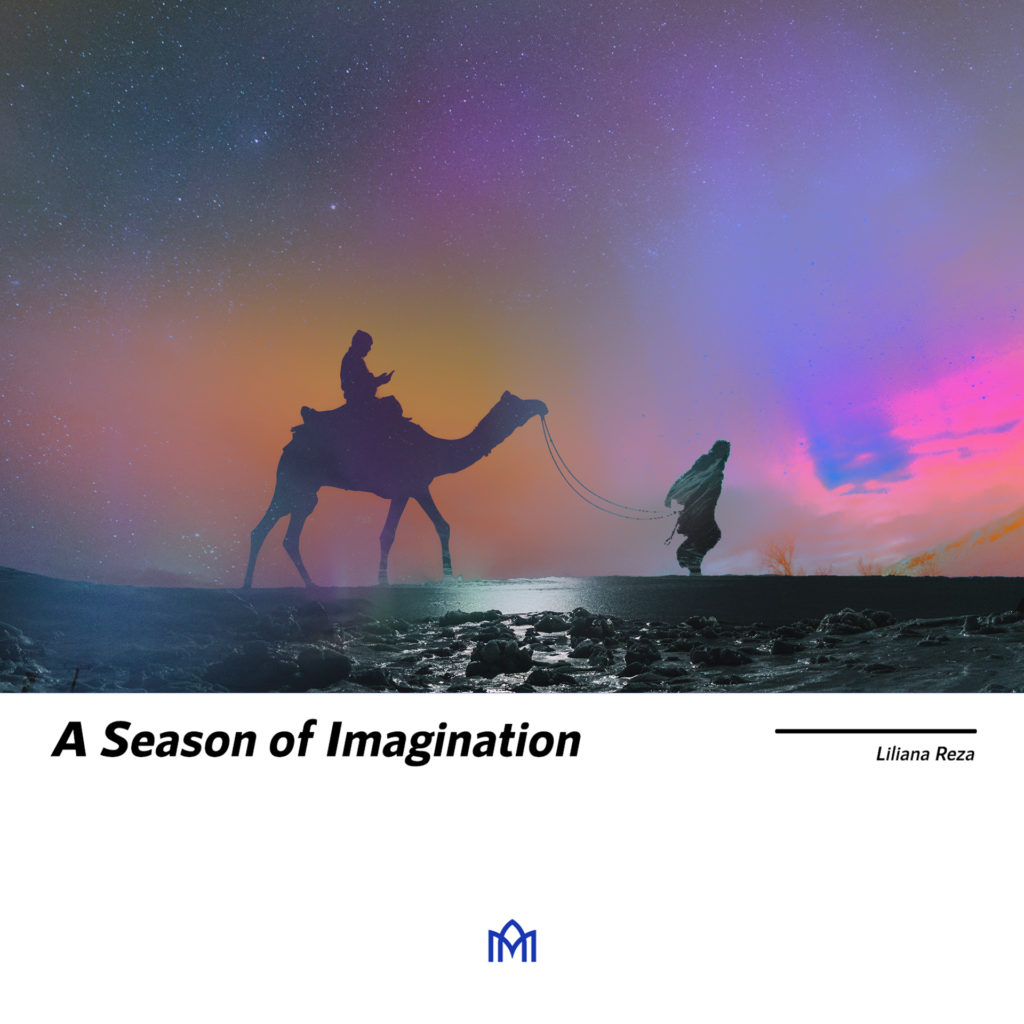
The liturgical season of Epiphany invites us into this kind of seeing. Epiphany welcomes a way of witnessing how God arrives in unexpected dark and quiet places, much like the Magi did in Matthew 2 as they sought the Christ child. The more I’ve practiced this kind of seeing, the more I’ve realized that imagination itself becomes prayer, a way of holding hope with God when the world feels unsteady and uncertain.
Sometimes, this kind of prayer feels like the only way I can stay rooted in hope while navigating so many unjust stories at the same time. These are not stories I encounter just through my work, but stories that live in my own soul. As a child of immigrants, these stories surface in conversations with my parents, in the lives of extended loved ones, and in the immigrant faith communities that shaped me as I matured in my own formational journey. These imaginative stories slow my breathing and steady my attention, opening my heart to God and my neighbor. It is a spiritual practice that helps me stay present to God and the people I love.
During the season of Epiphany, the Church reflects on the story of the Magi, who noticed a light and became curious students of it. God was doing something new, and the Magi chose to follow it. They crossed borders and unfamiliar places because they trusted that the Messiah would be found there. The story of the Magi reminds me each Epiphany that imagination is not wishful thinking, but instead it is a powerful way of paying attention to God’s activity in our world. It’s the kind of spiritual sight that leads to the very places where Christ is found.
In many ways, a living embodiment of this invitation echoes throughout Scripture. It’s an ongoing invitation to “Come and see” (John 1:39, 46) that Jesus offers to Andrew, Peter, and Nathanael, and Philip, to witness what God is already doing, and to risk being changed by the encounter. Jesus’ invitation is clear: Come and move toward mystery rather than certainty. This same invitation is what Isaiah imagines and then recrods in Isaiah 11:6, when he paints a picture of the peaceable kingdom, of the wolf lying down with the lamb and of justice and harmony meeting. That same imaginative courage is woven throughout Mary’s song in Luke 1, as Mary dares to believe that the lowly will be lifted and the hungry filled with good things.
These are not sentimental visions. They are holy acts of resistance, sacred prayers shaped by sacred imagination. So what if imagination is not escapism but a faithful spiritual practice of prayer as you seek justice and Shalom, the restoration of all things?
In the midst of my work in social justice and immigrant advocacy, I have found myself practicing this kind of prayer more intentionally–Not as spiritual daydreaming, but as prayerful envisioning of what could be. This holy sight is a way of imagining justice and restoration within immigrant communities and churches all throughout the world. None of this seeing is centered on what I can do, but solely on what God desires and is already doing among us.
One of the invaluable lessons that my immigrant church imparted within me growing up was the reality that prayer was powerful enough to name suffering honestly, while still daring to proclaim restoration and resurrection. Prayer is our dare to partner with the Holy Spirit’s power.
Epiphany is a season for the Church’s invitation that moves us from attentive participation into holy witnessing. We are invited to remain in conversation with God in the middle of uncertainty, to wonder and wander, guided by the Holy Spirit. And like the Magi, when we trust God’s prompting, wherever us it that we find ourselves, we can still cling to hope, for the Messiah has broken into our world.
///
The story of the Magi reminds me each Epiphany that imagination is not wishful thinking, but instead it is a powerful way of paying attention to God’s activity in our world. It’s the kind of spiritual sight that leads to the very… Share on X