A Subversive Enemy of Allyship
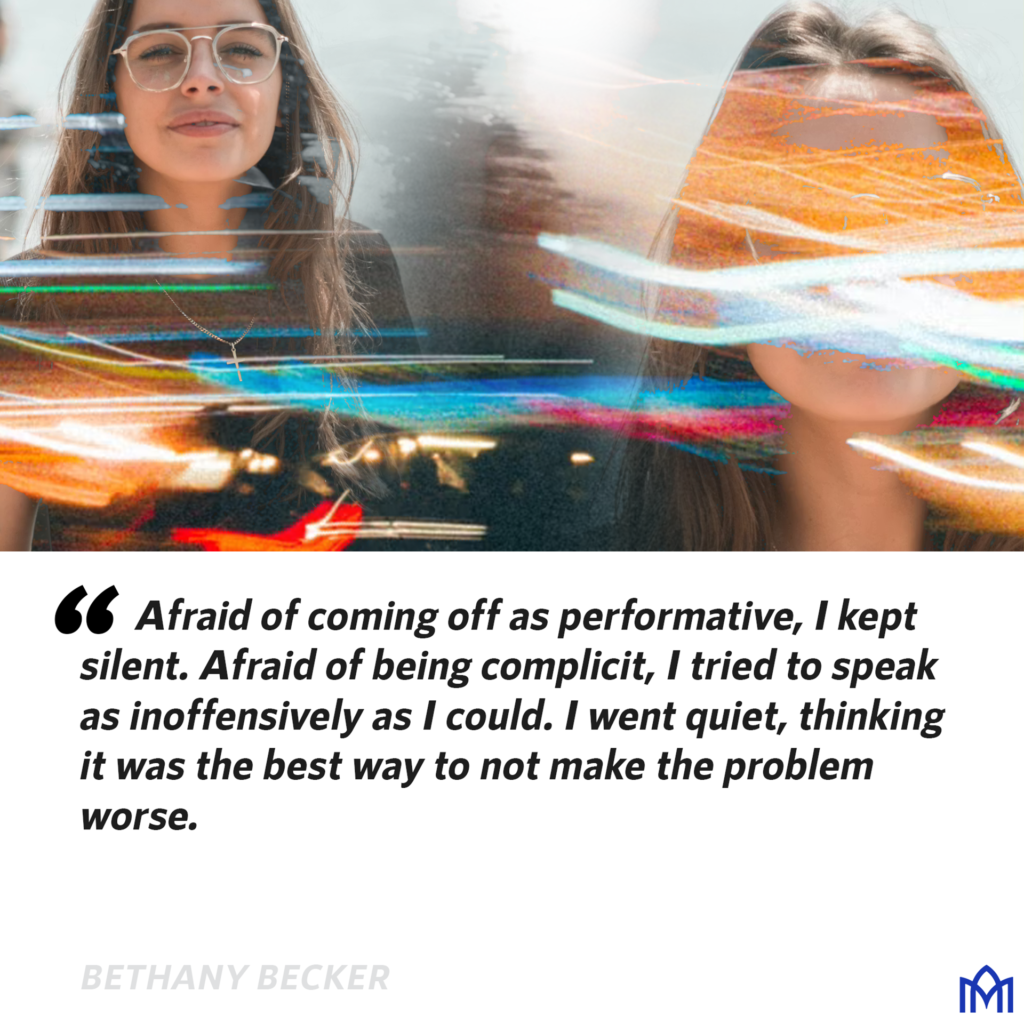
"Afraid of coming off as performative, I kept silent. Afraid of being complicit, I tried to speak as inoffensively as I could. I went quiet, thinking it was the best way to not make the problem worse."
When it comes to being an ally, people pleasing kept me quiet for several years.
In 2012 I moved to Cincinnati to help with a church plant, where I worked under Black leadership for the first time. It was my first time meeting Christian Democrats. I went from a “President Obama is ushering in the end times” echo chamber to a community that encouraged discussion and believed in Jesus’ command to serve the poor and defenseless. When Trayvon Martin was murdered, I watched my friends grieve up close. Something broke within me, and at the time there were no discussions, labels, reading lists, or how-to’s that I could find. By the time the Ferguson protests took place a few years later, I didn’t need to be told what do. I had been taught, led by, and loved by my friends for two years, and I was with them–fully. I spoke up to friends who unequivocally condemned the “race riots,” defending police brutality as ‘necessary.’
I was annoying. And I didn’t care.
In 2020, I lined up babysitters for my kids and marched with my friends in the streets. I got in trouble at work (a place with no minorities) for condemning the murder of George Floyd.
Fine. I knew what was right and righteous, and acted accordingly.
But some time between 2021 and 2025 something changed. I started to feel pressure to be the “right” kind of ally. I followed many different thought leaders in spirituality, resistance, and unity, and was overwhelmed by the conflicting advice on the right way to help as a white woman. I tried to take all the advice I could. I was shamed by the phrase “white woman tears” and tried to shut my tears down any time a new act of violence was committed.
Afraid of coming off as performative, I kept silent. Afraid of being complicit, I tried to speak as inoffensively as I could. I had questions, but didn’t want to burden anyone with them. I wanted to speak with my friends openly, but now was paralyzed with fear, unable to broach any kind of conversation that might traumatize, offend, or exhaust.
The openness and zeal of my naive 2014 self shut down. I went quiet, thinking it was the best way to not disappoint, irritate, or make the problem worse.
I started to feel pressure to be the 'right' kind of ally. I followed many different thought leaders in spirituality, resistance, and unity, and was overwhelmed by the conflicting advice on the right way to help as a white woman. Share on XFor the past year, I have been reckoning with this withdrawal. And I have realized that ultimately, it came down to this: I have made an idol of people pleasing. Again.
In an attempt to disappoint no one, I have disappointed everyone that matters to me by quietly praying and not publicly condemning what has broken my heart over the past four years. I so badly wanted to avoid being called a bad ally that I ceased being an ally at all. God forgive me, for I have abandoned my friends. I don’t care what you call these tears; I am weeping with the truth of this realization.
You cannot worship at the idol of people pleasing and be a productive ally to those on the margins. You cannot listen to everybody. You cannot avoid disappointing somebody. This is true for life in general, but allyship in particular often involves matters of life or death, particularly for those with whom we are standing in solidarity. You must reckon with imperfection and move forward anyway. Humanity, and the restoration of human dignity to those who have had it stripped away, depends on it.
I hate that I was silent for years. But as best (and as imperfectly) as I can, I am dusting off my pen and my voice box, and making good trouble once more. Forgive me for taking so long. ❤️
///
Allyship in particular often involves matters of life or death, particularly for those with whom we are standing in solidarity. You must reckon with imperfection and move forward anyway. Share on X